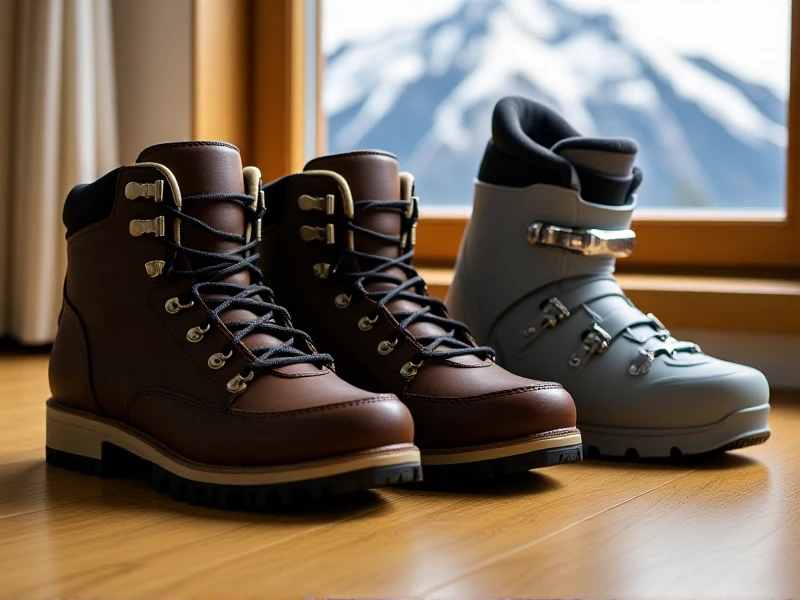
Maximize Your Mountain Days: The Essential Guide to Finding Your Perfect Ski Boots
Here is a 400-word SEO article focusing on the keyword "Ski Boots":
Forget your skis for a moment. Your boots are arguably the most critical piece of equipment in your entire skiing setup. The right pair of Ski Boots translates every flick of your ankle and subtle body movement into precise control on the slopes, enhancing performance, improving safety, and boosting overall enjoyment. Conversely, poorly fitted or unsuitable ski boots can turn a dream vacation into a painful ordeal.
Why Ski Boot Fit is Non-Negotiable
The primary purpose of ski boots is to form a highly responsive connection between your body and the ski. The boot transfers the forces created by your muscles directly to the ski's edges and base. A boot that fits snugly, without causing painful pressure points, fundamentally impacts your ability to turn, carve, and maintain balance effectively. Poorly fitted ski boots lead to reduced control, slower reactions, and unnecessary fatigue as your feet and legs fight the boot, sometimes even causing numbness or severe discomfort after just a few runs. Blisters are the least of your worries; inefficient power transfer means you work much harder for less precise results. Think of your ski boot as the foundation of your skiing capability.
Navigating Ski Boot Types: Flex and Last
Understanding a few key features is essential. Flex Index describes the boot's stiffness. Measured numerically (e.g., 70 to 130 ), a higher number means a stiffer boot. Beginner skiers generally benefit from softer flex boots (around 70-90) as they are more forgiving and easier to control at slower speeds. Intermediate skiers often move towards medium flex (90-110), seeking a balance of comfort and responsiveness for versatile terrain. Advanced and expert skiers tackling aggressive terrain at high speeds usually require stiff boots (110 ) that offer maximum power transmission and precision edge control, demanding significant input from the skier.
The Last refers to the widest circumference inside the boot shell around the forefoot, measured in millimetres (e.g., 97mm, 100mm, 103mm). If you have wider feet, a higher last boot is crucial for comfort. Those with narrower feet should seek a lower last for that secure, wrap-around feel. Most boots fall between 98mm and 102mm, categorized as medium width.
Investing in Professional Boot Fitting
This isn't something to gamble on based purely on online sizing charts or brand affinity. The complexities of fit, taking into account your instep height, arch profile, calf dimensions, and skiing style, necessitate an expert touch. Professional boot fitters use calipers to measure your feet accurately and observe your stance. They understand the distinct internal shapes (called "lasts") different brands utilise and can heat-mold boot liners (a common feature now) to conform perfectly to your foot anatomy. Expect to spend significant time trying on several brands and models. Walk around the shop, bend at the knees ("flex" the boot), and communicate any pressure points immediately.
Caring for Your Ski Boots
Maintaining your valuable ski boots is simple. Ensure they are dry inside before storing them – use newspaper stuffing or boot dryers. Remove footbeds after each skiing day to air out. Avoid storing them near direct heat sources. Keep buckles fastened loosely to prevent overstretching the shell material. Periodically check the condition of straps and buckles.
Finding your dream Ski Boots requires research and professional guidance but pays back massively every time you click in on the mountain. Invest the time and feel the difference true responsiveness makes!